Peptide purity is an important consideration in laboratory research. The presence of unwanted impurities can introduce variables into an experiment and make it more difficult to interpret results. Understanding how purity is measured and documented can help researchers make more informed decisions when evaluating research peptides.
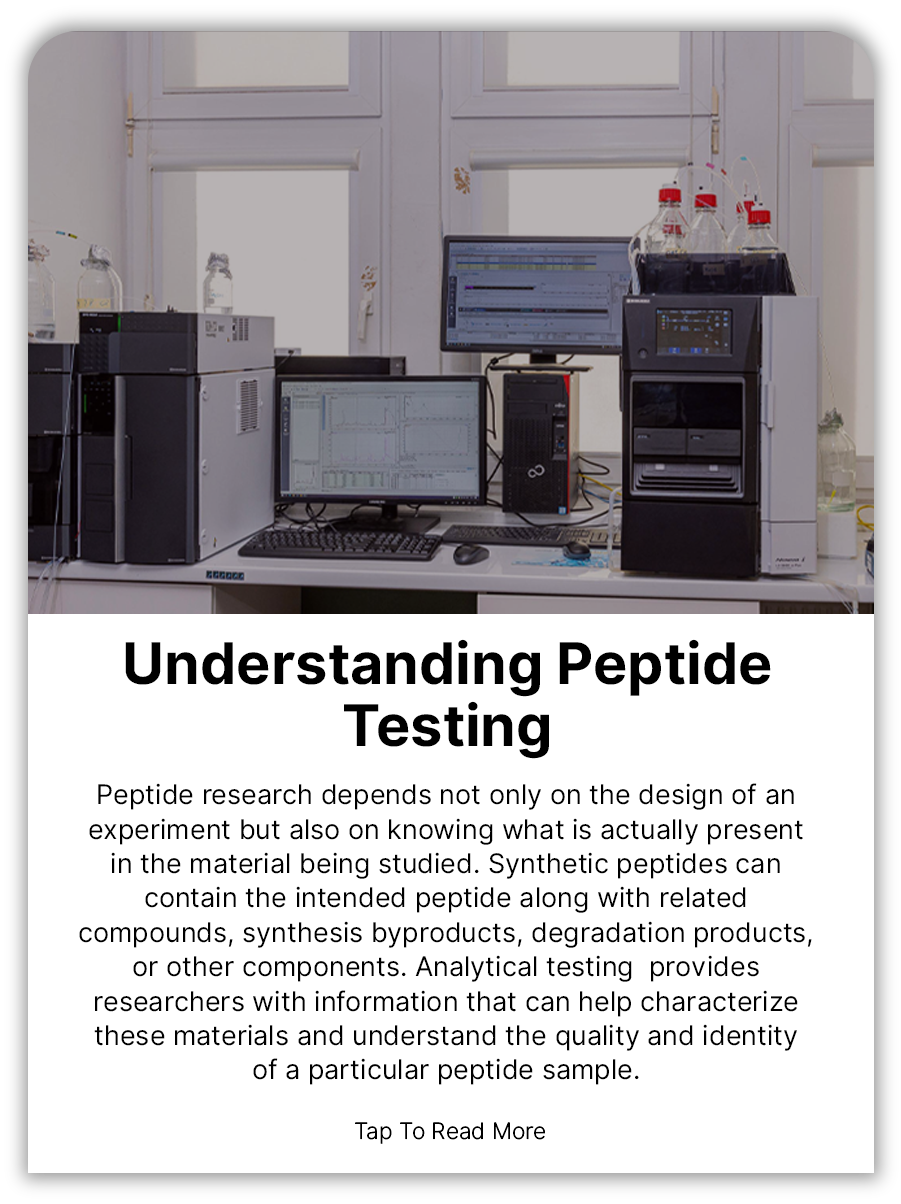
Peptide research depends not only on the design of an experiment but also on knowing what is actually present in the material being studied. Synthetic peptides can contain the intended peptide along with related compounds, synthesis byproducts, degradation products, or other components. Analytical testing provides researchers with information that can help characterize these materials and understand the quality and identity of a particular peptide sample.
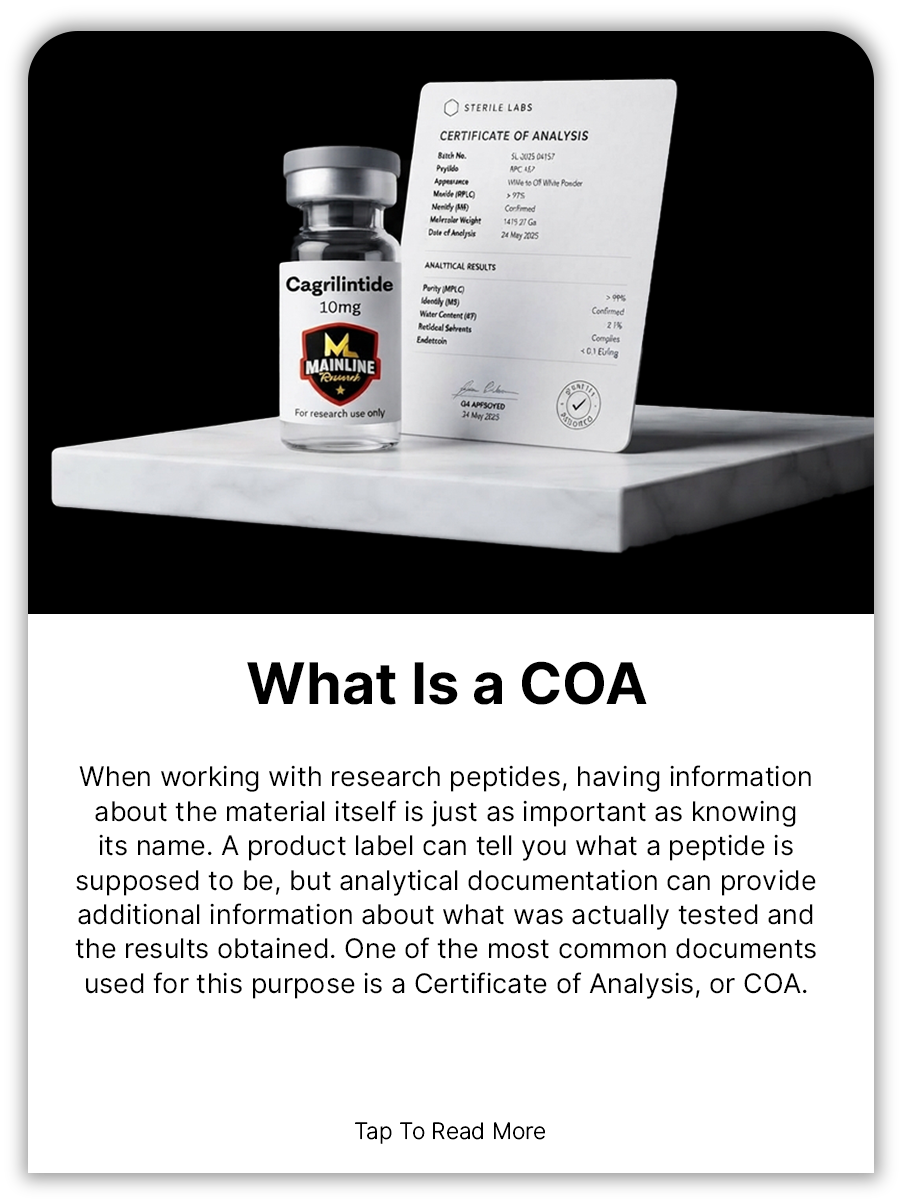
When working with research peptides, having information about the material itself is just as important as knowing its name. A product label can tell you what a peptide is supposed to be, but analytical documentation can provide additional information about what was actually tested and the results obtained. One of the most common documents used for this purpose is a Certificate of Analysis, or COA.