Understanding Peptide Testing
Peptide research depends not only on the design of an experiment but also on knowing what is actually present in the material being studied. Synthetic peptides can contain the intended peptide along with related compounds, synthesis byproducts, degradation products, or other components. Analytical testing provides researchers with information that can help characterize these materials and understand the quality and identity of a particular peptide sample.
Peptides are often used in lab studies because their clear molecular structures help scientists learn about how living things work. This includes how parts of a cell talk, to each other and how chemical reactions happen inside the body.. The quality of the peptide that is being studied matters a lot. If a sample has things it shouldn't have or if it has broken down it can cause problems that're hard to find later. Because of this peptide purity is not a number you see on a label or a report. It is a part of knowing what you are working with in an experiment.
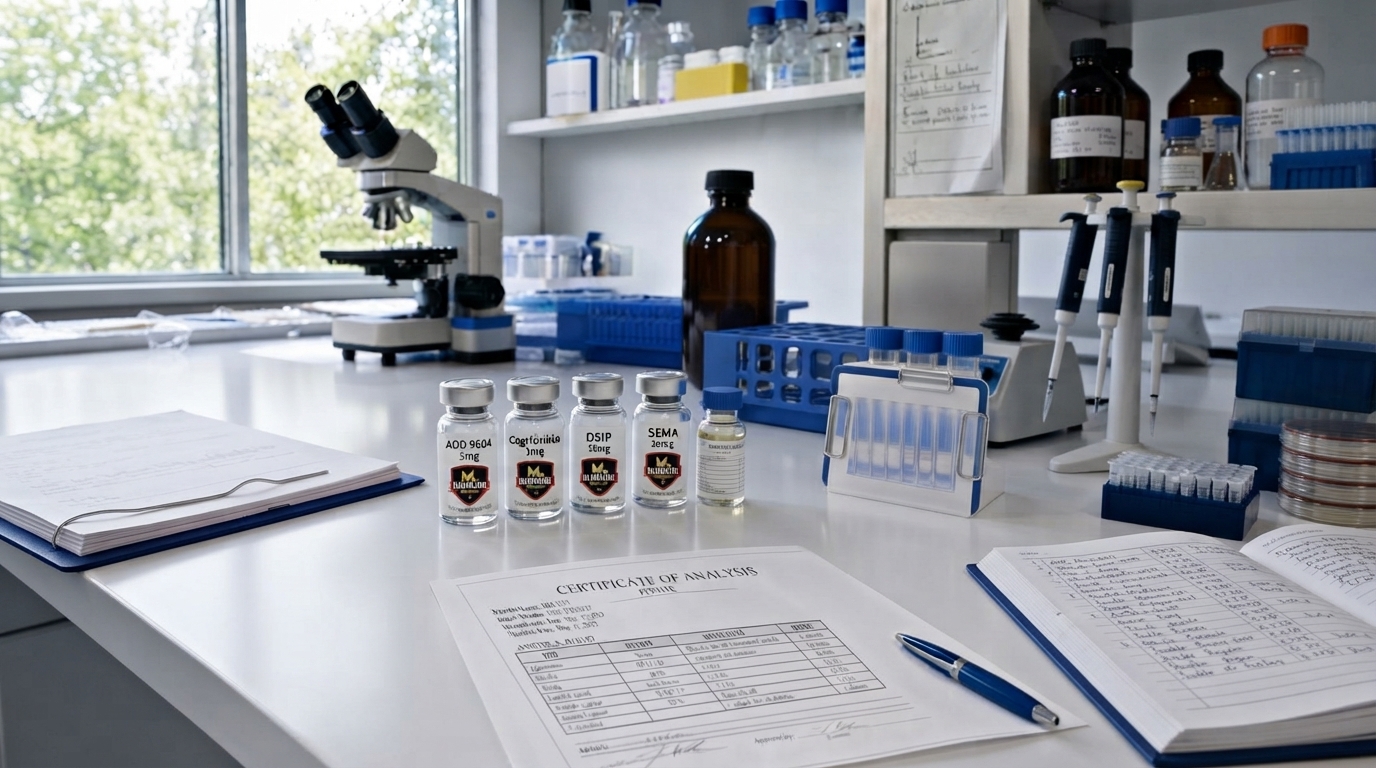
When researchers refer to peptide purity, they are generally describing the proportion of the desired peptide relative to other detectable components in the analyzed sample. A peptide may, for example, be reported as having 95%, 98%, or 99% purity. The meaning of that percentage depends on the analytical method used and how the result is calculated. It should therefore be interpreted together with the underlying analytical data rather than treated as an absolute description of everything contained in a vial.
This distinction becomes particularly important with synthetic peptides. The synthesis process can produce closely related byproducts, including truncated sequences, modified forms, or other process-related impurities. Peptides can also undergo chemical changes during processing or storage. Research into peptide purification and characterization has shown that even relatively minor impurities can affect analytical results and, depending on the application, potentially influence experimental observations.
For researchers, the concern is ultimately reproducibility. An experiment is easier to interpret when the material being tested is well characterized and its composition is understood. If an unexpected component is present in a sample, it can become another variable in the experiment. This does not necessarily mean that every impurity will have a measurable effect, but it does mean that researchers should know what analytical information is available before drawing conclusions from their results.
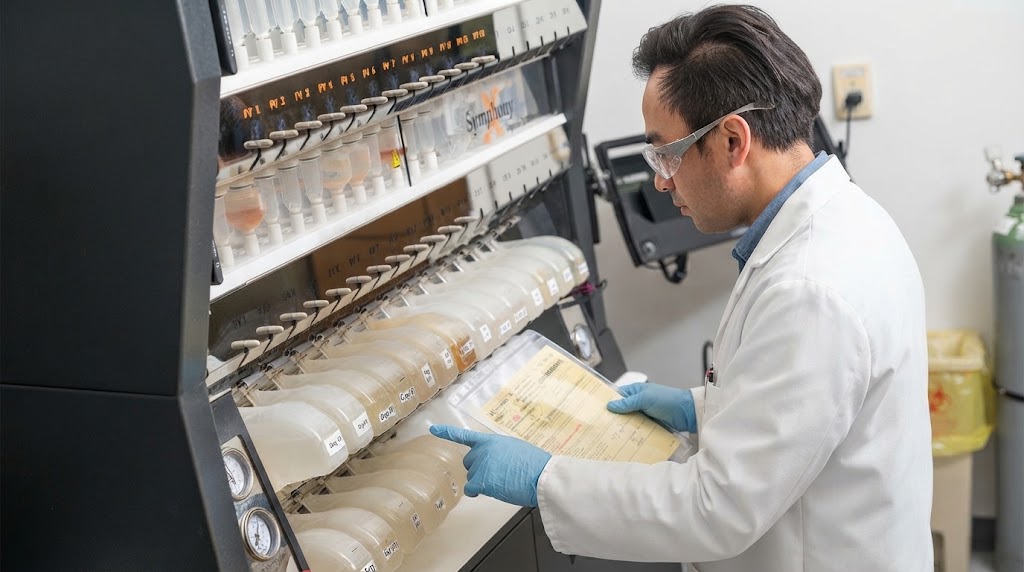
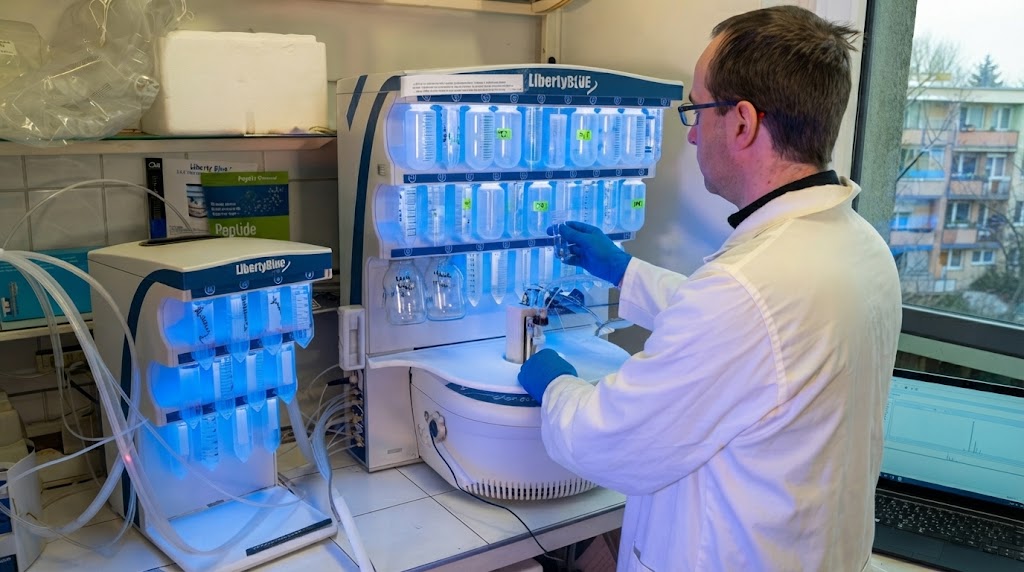
One of the commonly used techniques for evaluating peptide purity is high-performance liquid chromatography, or HPLC. In a typical HPLC analysis, compounds in a sample are separated as they pass through a chromatographic system. The resulting chromatogram contains peaks corresponding to components detected during the analysis. The relative area associated with the desired peptide can then be used as part of the calculation of the reported purity.
HPLC is valuable because it allows researchers to examine the composition of a sample rather than relying only on its appearance or the amount of material supplied. However, an HPLC purity result does not answer every analytical question. A high purity percentage does not, by itself, establish all aspects of molecular identity. This is why peptide characterization often involves more than one analytical technique.
Mass spectrometry provides another important layer of information. Rather than primarily separating components, mass spectrometry measures ions according to their mass-to-charge ratio and can be used to help evaluate the molecular mass and identity of a peptide. Published methods for synthetic peptide characterization describe mass spectrometry as an important tool for assessing peptide authenticity and integrity