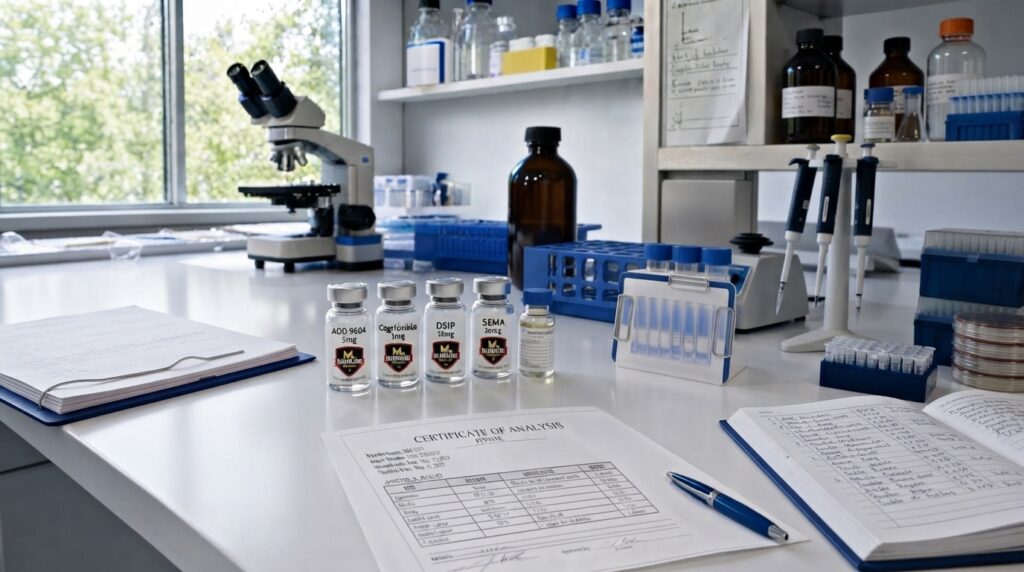
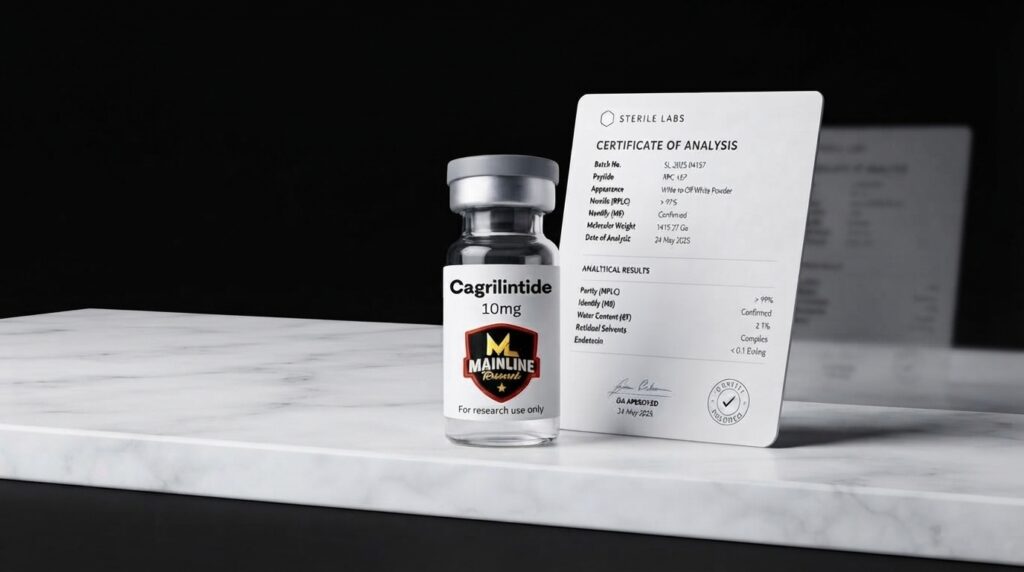
A Certificate of Analysis is a document that summarizes analytical testing performed on a particular material or batch. The exact information included can vary depending on the product, testing laboratory, and analytical methods used. For research peptides, a COA may include information such as the product name, batch or lot number, testing date, purity result, molecular mass, and the analytical techniques used to generate the results.
The purpose of a COA is not simply to provide a number that can be displayed next to a product. It provides researchers with additional context about the material they are evaluating. When analytical information is connected to a specific batch, researchers can use that documentation as part of their records when working with research materials.
One of the first things to look for on a COA is the product or peptide name. This should clearly identify the material that was tested. The name on the documentation should correspond with the material being evaluated, while additional identifiers such as a catalog number or product code can provide another way of connecting the document to the product.
The lot or batch number is equally important. A batch number provides a reference that connects the analytical report to a particular production batch. When reviewing a COA, researchers should check that the lot number shown on the document corresponds to the lot or batch of material they are evaluating.
Another important part of a peptide COA is the reported purity. Purity is commonly determined using an analytical method such as HPLC. The resulting value represents the proportion of the detected target component according to the method and calculation used by the testing laboratory.
A reported purity value should be interpreted within the context of the analytical method. For example, an HPLC purity result describes what was observed through that particular chromatographic analysis. It should not automatically be interpreted as a complete measurement of every possible substance present in the sample.
This is why the testing method is important. A COA may identify HPLC, mass spectrometry, or other analytical techniques used during characterization. Different techniques provide different types of information, so understanding which methods were used helps researchers understand what the reported results actually demonstrate.
HPLC is commonly used to separate components within a sample and evaluate their relative presence. The resulting chromatogram can provide information about the primary peptide component and other detectable peaks. This information is often used to calculate a reported chromatographic purity.
Mass spectrometry, on the other hand, provides information related to molecular mass. For peptide research, the measured mass can be compared with the expected molecular mass to help evaluate peptide identity. This makes mass spectrometry a useful complement to chromatographic purity testing